Qualifying my life as a musician, there never was any question. Choosing to attend UNC-Chapel Hill was one of the most heart wrenching decisions I made. Your choice of higher education is important. As a graduating senior having lived in my parent's house my entire life, being on one's own seems intimidating. You are choosing the four most important years of your life, because your future sustenance is reliant upon your decision. In retrospect that not always is true. With the massive shift in the American economy to wireless technology, the jobs we trained for twenty years ago are nonexistent. AI is threatening even more jobs. We are in an age when people are forced to do whatever is necessary to put food on the table. College freshman should not be self conscious about not knowing their future vocation. It helps, because you can focus on that specific training. For me there never was any question I would be a musician. I did lament musician jobs are scant, and it can be difficult to make a living. I did not trip on it. Instead I got a music education degree. Did it make it more difficult? You focus on different things. It lessened the burden of being expected to be an orchestral level trumpeter. I never aspired to this, and my trumpet professor knew it. I had not been exposed to or experienced orchestral or solo trumpet literature to peak my interest. James Ketch was a genius and one of the most amazing musicians I ever have known. He continues to perpetuate the art of jazz in retirement from UNC. There is a flip side to my college schooling and the education I received from Mr. Ketch. Ironically sometimes I believe I was a better trumpeter, before I entered UNC as a freshman. This was because of Governor's School at St. Andrew's College in summer of 1980. A high school student playing the most challenging wind ensemble literature for five hours a day develops your technique and stamina. If you have musical talent, this experience is indispensable. Twelve years of classical piano lessons ingrained complicated, modern, art music in my ear and under my fingers. George Gershwin, Aram Khachaturian and others. Khachaturian's "Toccata" was a lively Expressionist romp that required pianistic virtuosity, with which I never struggled. My last piano teacher, Betty Mohn, with her training from Shenandoah Conservatory, made me learn and play all the major and minor scales four octaves and at speed. When I took my piano proficiency exam at UNC as a senior, the committee was confounded. "Where has this pianist been?" I didn't want to spend hours practicing piano in a little room, so I didn't want to be a piano major. Van Cliburn often said the competitive piano world was not fun. Jazz, cocktails, and the smell of cigar smoke was. This difference is important and remains today. Classically trained musicians miss the necessary spirituality of jazz music. Jazz also is related to sex. To be blunt, broad, and discriminating jazz requires a more direct personal physical connection to the music. This connection exists in the classical repertoire as well, but in a different realm. You are actualizing the soul of other composers in a more formal setting. Jazz requires you have an understanding of yourself. You can make a statement using the voice of other jazz artists, and often this is where you begin. The best jazz musicians develop their own voices. You begin expressing what you feel and think. There is the element of swing, which is misunderstood. To be blunt, broad, and discriminating again, you must love the music. Until you establish this commitment and connection, your music will be devoid of true spirit. I didn't swing until my mid 30's. I was sitting in the parlor of a shared rental house in Columbus, Ohio playing my own piano recently purchased at the OSU piano sale. My friend and Navy trumpeter, Bill Dunn's daughter, still has this piano. It took this long for the elements to come together, and I made a commitment to the music and being a jazz musician. The jazz community in Columbus easily stoked this fire. It was authentic, passionate, and relentless. Unlike jazz in the South, jazz in the Midwest was all or nothing. There was no sipping lemonade on the porch of the mansion. Jazz was all there was. When I listen to myself after this summer of Governor's School, I knew what I was doing. It had been cultivated by members of the North Carolina Symphony in a grueling but effective summer program. The heart of this team was Terry Mizesko, the bass trombonist with the symphony and now an accomplished composer. When you begin college you start at the bottom. There is psychological competition like everyday life. It also proves a nurturing environment with the liberty to focus on your chosen aesthetic, can nurture artistry. America now is the proper metaphor. Once we were able to achieve a similar productive environment creating the Blockbuster movie in Hollywood, a myriad of interesting popular musics, and other scholastic academic achievements. This era is over, and we are struggling for survival. The sheer amount of environmental pollution fueling ADHD keeps us from that level of attainability. We are moving too fast with the created need of immediate gratification. There is little reflective study, and every component of American life has suffered. It is war, the struggle to survive in the most primitive and aggressive way. Intellectualism is dead, because it is difficult to find the solace to dig into that information. Governor's School was seminal in my development as a musician and trumpeter. Sadly I lost some of that while studying at UNC, because there was more information to absorb. Many hours were required for academic work that took away from focus on the trumpet. This was necessary, and the education at UNC is known for its richness in the Liberal Arts. It requires a full two years of General College. The other pitfall of UNC was we never discussed technique. There are many approaches to playing the trumpet, but there is a core set of axioms that must be recognized, studied, and implemented. I never learned these things, until I began working in the cruise ship industry. The trumpet positions in the cruise ship orchestras was no joke, so I met better trained trumpeters than myself. They were forthcoming in their knowledge about trumpet technique. James Ketch was a well rounded artist, and the focus was on literature. We did experiment a few times on trying to change my jaw position, but this did not bode well with me. Anyone can play the trumpet, and there are many jaw angles. Few are blessed without an over or under bite. The important thing is that you have a hermetic seal with the mouthpiece. How you achieve this airtight seal can vary. You can squeeze, smile, or pivot, but control of the muscular aperture is key. It is common sense. I never knew throughout college I tongued between my teeth stopping the continual flow of air. It is more beneficial to tongue at the base of the upper teeth. You can tongue more quickly and the airflow is not interrupted. These pedagogical premises apply today in the teaching of music. I realized I was not capable of being the trumpet artist that was Jim Ketch, but that didn't mean I could not be a musician. I was a pianist and had a desire to arrange and compose, which I did later in graduate school. Trumpet remained a part of my musical psyche, and later at The Ohio State University I committed to becoming a jazz trumpeter. With sheer will I taught myself to improvise by envisioning the keyboard in my head. Every successful jazz trumpet artist will tell you you must have a working knowledge of the keyboard, and it provides the visual representation of the musical spectrum vertically from bottom to top. Piano is important, but my teacher was intimidated by it. The most significant snafu of my music education at UNC was, there was no music education program. Shortly before I arrived as a freshman, the music department denied tenure to an important professor who directed the wind ensemble and spoke fluent German. They hired his replacement. He put on an impressive show guest directing this ensemble, but he also was tasked with teaching the music education courses. These were "block" courses that were over two hours in length with a handful of students. James Arrowood grossly was unprepared for this task. He preferred drinking Jack Daniels and indulging in the wind band literature. This education was nonexistent with the exception of a few classes in the education department of which I did well. It only was a few years ago, when I found my father's graduate school grades from Appalachian State, that I realized I had been deprived of a teacher's education. It explained my extreme self consciousness to teach school. I have a deep understanding of music literature including composition and arranging, but teaching beginning woodwinds and brass, I never was taught this pedagogy. It was UNC and their mistaken hiring of James Arrowood that contributed to this voidl. (Every time the Cessna Grand Caravan flies over, the roof of my house creaks.) It is not pleasant. I was and still am a musician, and it has been my entire life. Sadly the station at which I have arrived is not supportive of music, that being your home. It is optimistic to believe your home could be used for music. We would need to travel back in time one full century to find that dynamic, when hard working Americans had enough left over capital to buy an acoustic piano for their parlor. With this acquisition came the sheet music industry, Tin Pan Alley, the Brill Building, and the emergence of the American popular song. We do not have this today. Our culture largely is devoid of traditional music, except for its tepid representation on the internet. It is an anachronism, and our favorite bands from the 80's still are touring in their 80's. Wynton Marsalis often when asked about the future of jazz said you should look back. There is a hundred years of musical integrity there to absorb and appreciate. My neighborhood enjoys stagnant, staid, and inactive quiet. The little bit of music education I did receive in Sanford, NC while student teaching was from Camp Price. He often reiterated that you needed to get excited about you interests. "Rejoice in the the Lord with music and dance." White, middle class, conservative neighborhoods don't ascribe to this notion. I am doing my best to retool and live a life of music without actually playing, because my Hammond and Leslie overtax the sensibilities of my neighbors. I believe it is black culture who appreciates this kind of music. With my genetic musical talent, I also received a transfusion of African-American blood. It may be Appalachia, but it is far different than the strict regimen of Militaria, which is common time (or 4/4) in this town. "Hurry up and wait!" Personal awareness and expressive emotions are not revered for followings orders. It was Adolph Hitler who called American jazz devil music.
skip to main |
skip to sidebar
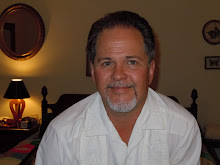

I invite all observant, inquisitive, positive people to post their views about the current state of affairs in the United States of America. This is a positive blog meant to enlighten the state of affairs in modern day America.
Blog Archive
- August (1)
- July (2)
- June (2)
- May (3)
- April (3)
- March (10)
- February (6)
- January (9)
- December (5)
- November (9)
- October (9)
- September (12)
- August (3)
- July (5)
- June (6)
- May (2)
- April (3)
- March (5)
- February (4)
- January (1)
- November (1)
- October (4)
- September (2)
- August (4)
- July (7)
- June (6)
- May (7)
- April (9)
- March (3)
- February (14)
- January (15)
- December (10)
- November (13)
- October (8)
- September (12)
- August (11)
- July (17)
- June (5)
- May (10)
- April (12)
- March (9)
- February (11)
- January (7)
- December (4)
- November (4)
- October (3)
- September (8)
- August (3)
- July (2)
- June (5)
- May (4)
- April (6)
- March (13)
- February (7)
- January (10)
- December (9)
- November (12)
- October (5)
- September (3)
- August (11)
- July (16)
- June (14)
- May (17)
- April (6)
- March (6)
- February (4)
- January (18)
- December (7)
- November (7)
- October (12)
- September (9)
- August (11)
- July (14)
- June (6)
- May (5)
- April (5)
- March (7)
- February (4)
- December (2)
- November (3)
- October (2)
- September (9)
- August (3)
- July (2)
- June (5)
- May (1)
- April (6)
- March (5)
- February (9)
- January (6)
- December (10)
- November (1)
- September (4)
- August (2)
- July (2)
- June (1)
- May (6)
- April (2)
- March (5)
- February (7)
- January (6)
- December (5)
- November (1)
- October (9)
- September (14)
- August (15)
- July (12)
- June (3)
- May (5)
- April (4)
- March (1)
- February (3)
- January (9)
- December (8)
- November (4)
- October (3)
- August (2)
- July (2)
- May (2)
- April (6)
- March (19)
- February (7)
- January (7)
- December (7)
- November (8)
- October (4)
- September (7)
- August (8)
- July (12)
- June (15)
- May (12)
- April (11)
- March (3)
- February (5)
- January (10)
- December (4)
- November (8)
- October (10)
- September (13)
- August (14)
- July (2)
- May (1)
- April (1)
- March (1)
- January (5)
- October (1)
- August (1)
- July (1)
- June (1)
- May (5)
- April (2)
- March (3)
- February (1)
- April (1)
- February (1)
- January (1)
- December (1)
- November (5)
- May (1)
- April (5)
- March (8)
- February (3)
- January (1)
- October (4)
- September (6)
- April (4)
- March (1)
- November (1)
- August (5)
- February (2)
- January (37)
- December (31)
- November (24)
- October (16)
- June (8)
- May (31)
- April (16)
- September (56)
- August (54)
- July (9)
- June (27)
- May (20)
- March (11)
- February (5)
- October (4)
- September (6)
- August (21)
- July (1)
- June (30)
- May (16)
- August (11)
- July (5)
Music Links
About Me
- Par3pio
- Dogtown, Ohio, United States
- Musician, Composer, Academician, Skateboarder, Writer, Poet
Counter